[ad_1]
The Iranian regime’s draconian week-long shutdown of the web throughout nationwide anti-government protests this month value the nation’s struggling economic system an estimated $1.5 billion.
However the price-tag might not even be probably the most damaging facet of the cutoff, and it could solely be a harbinger of worse issues to come back because the regime seeks to limit the Iranian public’s entry to the world, in line with specialists and leaks.
“The worst aspect impact is just not direct monetary loss,” says the chief govt of a north-central Tehran expertise agency which employs 10 folks. “The worst factor is that almost all of my associates are searching for a method to go away the nation now.”
Obtain the brand new Indpendent Premium app
Sharing the complete story, not simply the headlines
The web blackout was meant to halt the dissemination of details about the protests and movies displaying protesters angered by a sudden and dramatic hike in gas costs battling regime forces.
Regardless of Iran having eliminated gas subsidies and raised petroleum costs partly to spice up the economic system, the following crackdown might find yourself damaging it much more.
Violence by safety forces left at the least 143 folks useless, in line with Amnesty Worldwide. Amongst these killed was 27-year-old Pouya Bakhtiari, allegedly shot useless by safety forces 16 November within the northern metropolis of Karaj, the place some 9 folks had been killed in complete. His killing got here after he recorded a video, now spreading on-line, urging Iranians to take to the streets.
1/11
An indication in opposition to the Shah in 1979
Getty
2/11
Armed ladies on guard in one of many essential squares in Tehran in the beginning of the Iranian Revolution
Getty
three/11
Demonstrators maintain a poster of Ayatollah Ruhollah Khomeini, in January 1979, in Tehran, throughout an indication in opposition to the Shah
AFP/Getty
four/11
Iranian rebels pose with a U.S. flag they bayonetted the wrong way up on bushes at Sultanabad Garrison northeast of Tehran on February 12 2019
AP
5/11
A gun battle in Khorramshahr throughout the revolution, 1979
Getty
6/11
Ayatollah Khomeini’s supporters show within the streets of Tehran in opposition to the Shah amongst tear gasoline. The “black friday” induced the demise of 200 folks in line with the Iranian authorities, 2000 in line with the opposition, September eight 1978
AFP/Getty
7/11
Girls sporting the normal Chador show within the streets of Tehran in opposition to the Shah on September 7 1978
AFP/Getty
eight/11
Demonstrators in Tehran calling for the substitute of the Shah of Iran throughout the Iranian Revolution, 1979. They carry placards depicting Ayatollah Mahmoud Talaghani, one of many main revolutionaries
Getty
9/11
Ayatollah Khomeini’s supporters show within the streets of Tehran in opposition to the Shah. The “black friday” induced the demise of 200 folks in line with the Iranian authorities, 2000 in line with the opposition, September eight 1978
AFP/Getty
10/11
Hundreds of the Ayatollah Khomeini’s supporters on the streets of Tehran calling for the non secular chief’s return in January 1979
Getty
11/11
The Iranian Islamic Republic Military demonstrates in solidarity with folks on the street throughout the Iranian revolution. They’re carrying posters of the Ayatollah Khomeini, the Iranian non secular and political chief
Getty
1/11
An indication in opposition to the Shah in 1979
Getty
2/11
Armed ladies on guard in one of many essential squares in Tehran in the beginning of the Iranian Revolution
Getty
three/11
Demonstrators maintain a poster of Ayatollah Ruhollah Khomeini, in January 1979, in Tehran, throughout an indication in opposition to the Shah
AFP/Getty
four/11
Iranian rebels pose with a U.S. flag they bayonetted the wrong way up on bushes at Sultanabad Garrison northeast of Tehran on February 12 2019
AP
5/11
A gun battle in Khorramshahr throughout the revolution, 1979
Getty
6/11
Ayatollah Khomeini’s supporters show within the streets of Tehran in opposition to the Shah amongst tear gasoline. The “black friday” induced the demise of 200 folks in line with the Iranian authorities, 2000 in line with the opposition, September eight 1978
AFP/Getty
7/11
Girls sporting the normal Chador show within the streets of Tehran in opposition to the Shah on September 7 1978
AFP/Getty
eight/11
Demonstrators in Tehran calling for the substitute of the Shah of Iran throughout the Iranian Revolution, 1979. They carry placards depicting Ayatollah Mahmoud Talaghani, one of many main revolutionaries
Getty
9/11
Ayatollah Khomeini’s supporters show within the streets of Tehran in opposition to the Shah. The “black friday” induced the demise of 200 folks in line with the Iranian authorities, 2000 in line with the opposition, September eight 1978
AFP/Getty
10/11
Hundreds of the Ayatollah Khomeini’s supporters on the streets of Tehran calling for the non secular chief’s return in January 1979
Getty
11/11
The Iranian Islamic Republic Military demonstrates in solidarity with folks on the street throughout the Iranian revolution. They’re carrying posters of the Ayatollah Khomeini, the Iranian non secular and political chief
Getty
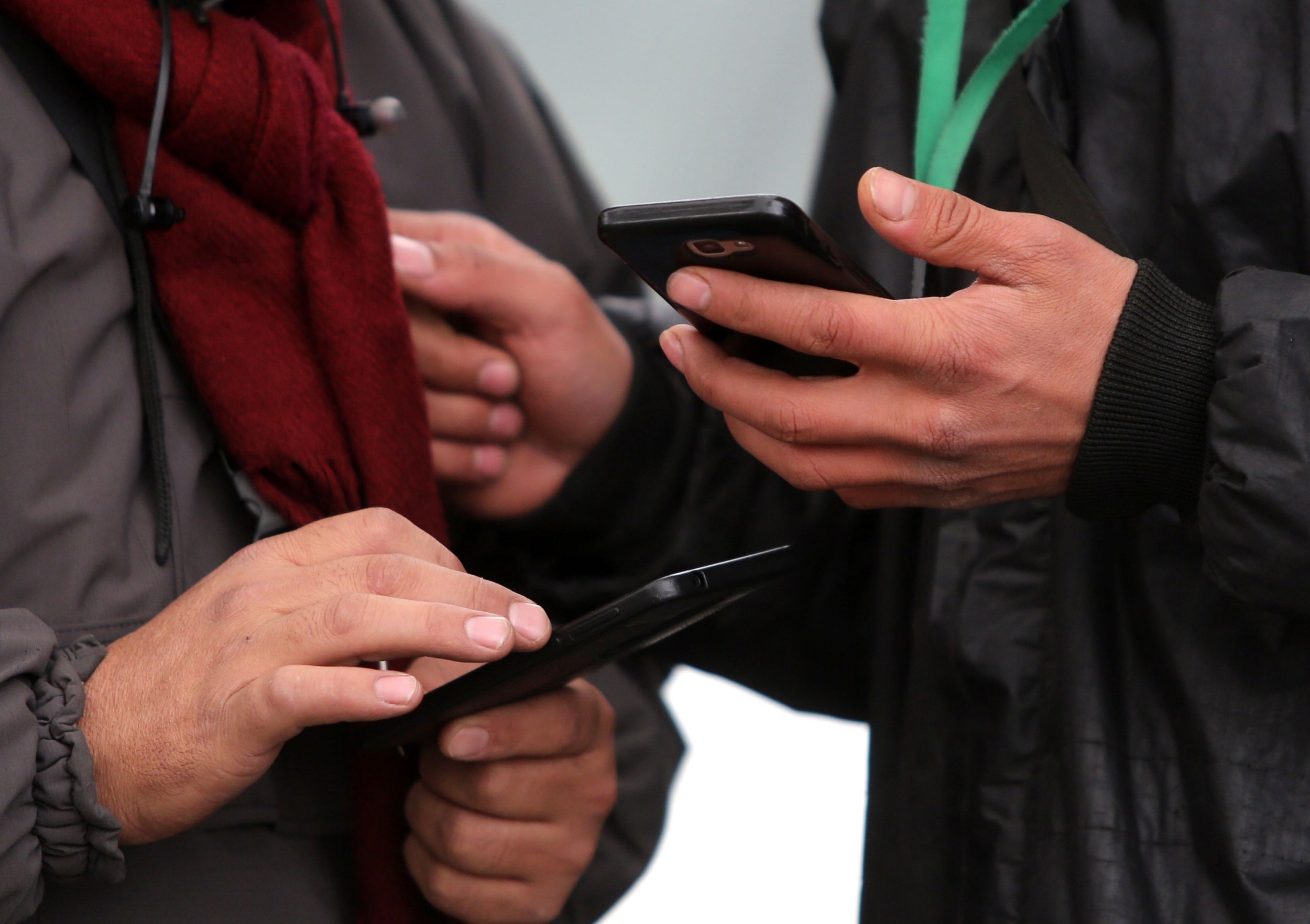
The web maneuver successfully minimize the nation off from the remainder of the planet, stifling the flexibility of family and friends members from speaking with one another, and from commerce from going down.
To many, it confirmed the intense measures the regime’s elite had been keen to take to cling energy and canopy up alleged crimes by safety forces. Even Iran’s comparatively reasonable president, Hassan Rouhani, endorsed the political repression, betraying the largely center class urbanites who twice voted for him over nominal hardline candidates.
Western officers condemned the shutdown however the USA has been alone in imposing sanctions. The US Treasury Division this week put restrictions on any dealings with Mohammad Javad Azari Jahromi, Iran’s Minister of Telecommunications.
“Regardless of proclamations that he helps expanded web entry in Iran, Azari-Jahromi has repeatedly justified the more and more restrictive measures of his ministry as needed to take care of nationwide safety, and additional claimed that they’re primarily based on international threats to overthrow the regime,” stated the Treasury assertion.
“They shut off the web in order that they might have interaction in actions primarily at midnight, with out communications,” US Secretary of State Mike Pompeo stated in a radio interview this week.
In response to a leaked doc that was confirmed as genuine by the BBC, Iran might be planning to much more tightly management the web and is already figuring out plans with state establishments to allow them to have entry to international web instruments and websites whereas blocking entry for odd Iranians, who could be directed to make use of a tightly monitored home web community.
Consultants say that Tehran officers, whilst they themselves use Western social media to advertise their geopolitical agenda, have been laying the groundwork to probably minimize off odd Iranians from the broader web in what’s formally being referred to as the Nationwide Web Community – officers deny it will likely be the only real web.
“Developments over the previous 10 years have been getting ready for a situation the place they might implement such a shutdown, and over the previous two years alone insurance policies and developments, particularly relating to the Nationwide Data Community, have indicated this may be the case,” says Mahsa Alimardani, a researcher specializing in web freedom in Iran at Oxford College, and at Article 19, a free-speech advocacy group.
“Each mass protest motion in Iran, for the reason that first one within the web age in 2009, has resulted in additional centralisation and regulation of the web house,” she says.
Azari-Jahromi, the telecommunications minister, has denied such a plan exists. However on Friday, hardline prayer chief Mohammad Javad Haj Ali Akbari informed regime acolytes gathered at Tehran College that the web shutdown was a “promising check” earlier than full implementation of the Nationwide Data Community, which he stated wanted to be accelerated.
Some students and analysts have sought to determine the direct monetary impression of the current shutdown. Estimates of the harm to the economic system vary from $370 million per day to greater than $1 billion in complete. The reformist every day newspaper Mardom Salari printed a report estimating $1.5 billion in harm.
The disruption threw lives and commerce into chaos. Some 62 million of Iran’s 82 million folks use the web on their cellular gadgets, in line with official statistics. The in depth 23 November report in Mardom Salari described “bewildering” harm to commerce.
The shutdown resulted in a file sell-off within the Tehran Inventory Alternate. It left ships unable to speak with ports, supply companies unable to trace shipments, foreign money trade bureaus unable to transform cash, college college students unable to satisfy software deadlines, visa requests at embassies delayed, journey businesses unable to difficulty tickets, and pharmacies unable to fill prescriptions.
“At this time, hours and even minutes are essential in worldwide commerce,” Sayyid Razi Haj Aqamiri, a member of the Tehran Chamber of Commerce, informed the every day newspaper Etemad. “Once we fail to supply the necessities of importers for any purpose, different nations and corporations will substitute us.”
Experience-sharing apps and food-delivery companies utilized by Iranians who rely more and more on the web had been minimize off.
The web govt says the shutdown value his younger dotcom firm about $four,000 in misplaced income, which is a “an enormous quantity for slightly Iranian software program firm.”
His firm has every day working prices of about $500 a day. Had the shutdown continued he would have been compelled to put folks off. “All of our tasks had been stopped,” he says. “Creating software program with out web is unimaginable truly.”
Different firms that had been already struggling have determined to shut up store for good, says one other determine in Iran’s IT business.
“A colleague had a small-time begin up struggling for about 4 years,” he says, talking throughout the shutdown. “He’s saved it going tooth and nail. He’s paying salaries of 10 folks. Now the web is down. He’s not earning money. However he’s nonetheless paying the salaries.”
Azari-Jahromi promised in a press release this week that authorities would attempt to reimburse companies for his or her losses. “Some losses are irreparable; we’ll attempt to compensate for them as a lot as attainable,” he was quoted as saying by Iranian media.
As tempting because it is perhaps for Iranian authorities, utterly slicing off Iranians from the web could be tough, largely as a result of the economic system is so reliant on internet purposes and instruments which can be worldwide — like blockchain, which is used for banking transactions.
“They can not completely shut off Iranians to the worldwide web,” says Alimardani. “That might imply the Iranian economic system and business would wish to perform in isolation from the remainder of the world.”
[ad_2]
Source link