[ad_1]
We’re fortunate sufficient to be spectators in one of the vital thrilling technological races within the, albeit comparatively temporary, historical past of computing.
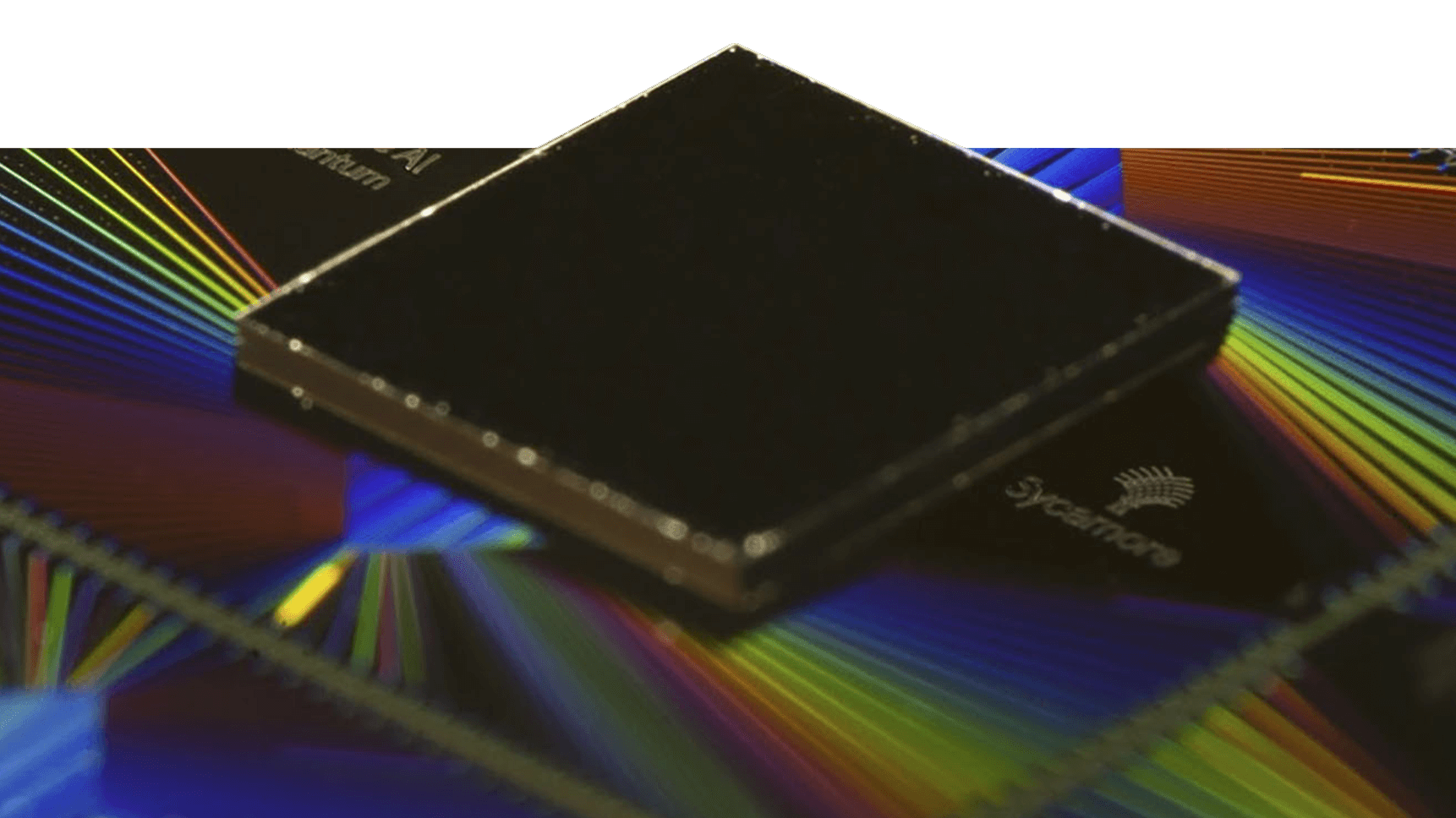
A matter of months in the past, Google claimed a landmark breakthrough— its Sycamore quantum processor achieved ‘quantum supremacy’, fixing a mathematical drawback in 200 seconds that will have taken a matter of millennia for the world’s greatest supercomputer.
Google’s arch-rival in quantum, IBM disputed the declare, arguing that the identical activity could possibly be undertaken by a traditional system in 2.5 days, with larger constancy.
Both manner, progress is being made at a speedy tempo within the labs of those two tech giants. However, like all good competitors, the end result of which is able to triumph first is unsure, whether it is both of those two leaders in any respect.
“Within the twentieth century, regardless of coming a full eight years after the Soviets’ preliminary area flight, America’s touchdown on the moon got here to outline the House Race,” Shimrit Tzur-David, CTO and Co-Founding father of Secret Double Octopus informed TechHQ.
“For all we all know, IBM might find yourself attaining essentially the most definable second within the twenty-first-century race for quantum supremacy. Solely time will inform.”
For now, whereas R&D continues to thunder on, and curiosity from new entrants and potential clients results in forecasts that the quantum computing market might attain a value of US$5.eight billion by 2025, we will solely gaze on the prospects for business forward.
Whereas the ‘bit’ in a classical laptop can have a price of both 1 or zero, the quantum bit (qubit), will be each on the identical time. This permits a number of calculations to be carried out on the identical time.
Quantum computer systems will, subsequently, work in live performance with typical programs, enabling companies to enter a brand new universe of prediction modeling. That might open up untapped potential within the synthesis of latest medication and energy-efficient supplies, in addition to monetary modeling, with different massive knowledge purposes in aerospace & protection, BFSI, healthcare & life sciences, and vitality & utilities.
In the meantime, capable of compute large quantities of knowledge, one in every of quantum computing’s central purposes could possibly be in synthetic intelligence (AI), the place it is going to be capable of quickly pace up the AI studying curve.
“Quantum computing can have a colossal impact on how companies resolve issues and can create solely new markets as decision-making issues with out linear options turn out to be solvable in cheap quantities of time,” stated Tzur-David.
“Options to NP [nondeterministic polynomial time] issues, which might in any other case necessitate ‘guess and examine’ on an unimaginable scale, can be inside attain.”
Tzur-David stated that, on this regard, one future use case for quantum computing could possibly be in calculating the optimum placement of charging stations for electrical vehicles.
“The place can we put them? Creating the grid means congregating them round inhabitants facilities whereas additionally stopping lengthy stretches of street unequipped, in order to make sure that drivers don’t get stranded. The attainable combos are infinite.
“The statistical algorithms we at the moment use for this are merely a type of greatest guessing. Quantum computing may make these determinations extra shortly and extra correct, enabling each companies and governments to pay attention their efforts on different challenges,” he stated.
Because the daybreak of quantum computing approaches, bringing with it huge new prospects, conventions can be challenged, and that features our notions of how we will defend our machines and networks— which, in fact, are often confirmed to be removed from hermetic.
Of specific concern is quantum computing’s potential to finally break encryption strategies, that are utilized in various levels to safeguard knowledge from particular person to state degree.
Whereas quantum computer systems usually are not there but— it’s estimated to take the facility of four,000 qubits to interrupt in the present day’s ‘sturdy’ encryption keys— it has been instructed that it could possibly be a matter of just some years, whereas weaker encryption algorithms can be threatened sooner.
“[…] quantum computer systems will render sure safety options out of date, similar to RSA’s answer, which relies on discovering prime multipliers of a big quantity, aka an uneven key,” Tzur-David stated.
“Older uneven keys, that are shorter than in the present day’s keys, can be particularly susceptible. Nevertheless it doesn’t cease there. In PKI-based encryption, uneven protocols are used to share a symmetric key.
“Till now, whereas a 256-bit uneven key has been susceptible, 256 bits for a symmetric key has been sufficient. Within the face of quantum computing, it won’t be sufficient.”
After all, whereas readability round threats is about as sure because the expertise’s potential purposes, the cybersecurity business is smart to those developments, notably within the face of the forthcoming growth of cloud-based quantum-computing-as-a-service, which may put the computing’s energy within the grasp of unfavorables.
“[…] businesses and establishments around the globe are amassing knowledge, readying themselves for the second when quantum computing opens the door to an enormous encryption break, one that’s now not theoretical.
“This menace towards each uneven and symmetric keys has garnered the eye of enterprises, particularly these in knowledge safety.”
The brand new vulnerabilities offered by quantum computing energy would “essentially change the concept of ‘due diligence’,” by the programs we at the moment belief to deal with our knowledge, stated Tzur-David.
Whereas reminding the general public that bank card knowledge was encrypted might have helped Marriott assuage a number of the preliminary concern following its 2018 knowledge breach— regardless of the important thing being saved on the identical server— the identical remark wouldn’t instill a lot confidence within the age of accessible quantum computer systems.
“If beforehand secure keys turn out to be unreliable, companies will be unable to merely spotlight no matter encryption they used. If their keys are outdated and quick sufficient, all of their encryption may turn out to be meaningless,” Tzur-David stated.
Make no mistake, whereas now we have but to actually enter an period the place quantum computer systems type a part of a brand new menace panorama, the present expertise— if it have been “exterior of Google’s lab in the present day”— is already sufficient to interrupt shorter encryption keys, which will be in use in servers, which will be housing delicate knowledge.
“The scary half is that it’s a matter of time. As soon as somebody has amassed knowledge encrypted with quick keys, there’s no method to retrieve it. It’s only a matter of ready till they will break it, after which recreation over.
Tzur-David concluded: “For us to maintain tempo, we have to transition away from computational energy because the be-all-end-all of cybersecurity. Multiparty computation, secret sharing, and different algorithms that serve information-theoretic safety can present new foundations.
“These options might be able to bypass quantum computing’s formidable energy as a result of their effectiveness just isn’t measured when it comes to energy.”

[ad_2]
Source link