[ad_1]
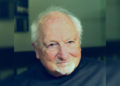
Subhash Kak is an Indian-American laptop scientist who has made main contributions to cryptography, synthetic neural networks, and is recognised as one of many pioneers of quantum computing.
Kak was awarded the Padma Shri in 2018 for his work on the historical past of science, the philosophy of science, historical astronomy, and the historical past of arithmetic. He’s the creator of 12 books together with The Nature of Bodily Actuality, The Structure of Data, and Thoughts and Self.
We spoke to him about how the Vedic mannequin of actuality corroborates the findings of contemporary science, his pioneering work in quantum computing, now a catchphrase on the earth of Data know-how, the bounds of science in coping with the puzzle of consciousness and the way asuras and devas reside in every particular person.
Describe the premise of thoughts and self. How is it completely different from different commentaries on Patanjali’s Yoga Sutra?
Since my very own analysis has touched upon lots of the parts that go into the Yoga Sutra, I wished my commentary to be told by the latest concepts in science. In some ways, the Yoga Sutra is among the most vital texts of our occasions for it offers with the thriller of consciousness that has been referred to as the final frontier of science. One may ask why, regardless of the various advances of physics and psychology, we aren’t any nearer to explaining the workings of the thoughts and its relationship to matter.
I additionally wished to put the Yoga Sutra throughout the bigger context of Vedic knowledge and to separate the literal from the metaphorical. The Vedas converse of cosmic regulation, however in addition they argue that Common Consciousness is past issues. Thus the particular powers described partially three of the Yoga Sutra are insights that may assist one grasp the surface world however do it in a way that’s in keeping with science.
I would really like the reader of my e book to see the Yoga Sutra as a textual content not only for non secular awakening but additionally to succeed in the wellsprings of 1’s creativity. Yoga is not only about esoteric and other-worldly issues; it’s to arrange oneself for residing one’s life as totally as attainable, and I do hope that my Introduction to the textual content and the translations have succeeded in speaking this central message.

Describe the yogic mannequin of thoughts, self and consciousness. How does it tally with the findings of contemporary science?
Patañjali’s development of thoughts relies squarely on the Vedic concept of two selves, one the indifferent witness and the opposite the conditioned particular person. That is described within the well-known picture of two birds on the tree (the physique) the place one merely seems to be on whereas the opposite is consuming the candy fruit. The fowl absorbed in sensory gratification is a part of a causal chain, and actually not free. Our minds act paradoxically with regards to questions of freedom and data. The Kena Upanishad describes this by way of the riddle: the one who thinks he is aware of, doesn’t; and the one who doesn’t, does.
Our capability to acquire data is because of consciousness, and ignorance is attributable to the coverings which can be a results of habits or saṃskāras that obscure. The Self is sort of a lamp that shines gentle within the pool of the thoughts, however this gentle is scattered in so many various methods by ripples that distort the picture. The aim of Yoga is to make the pool of the thoughts clear in order that one can attain one’s true self and change into artistic. These concepts transcend both present-day psychology or physics, however each these tutorial disciplines could also be prepared for revolutionary new advances.
Let’s additionally not neglect that Erwin Schrödinger claimed that one of many deepest concepts that led him to the invention of quantum mechanics got here to him from the Upanishads. This concept of Atman = Brahman led him to the notion of superposition of states which is central in quantum principle.
A time period that you simply coined, “quantum neural computing”, posits that the mind is a machine which reduces the infinite prospects of a “quantum-like common consciousness”, itself a consequence of the recursive nature of actuality. Please clarify the philosophy of recursionism for the lay reader.
Quantum approaches to the thoughts have opened up concepts that have been unattainable to think about in classical approaches. Consciousness may be seen as a common operate that’s decreased by the brain-mind of the person.
Recursionism is an concept that’s central in Vedic thought. It begins with the dictum that the outer is mirrored within the interior, as within the assertion yat piṇḍe tad brahmāṇḍe (as within the cell, so within the cosmos). This expresses the connection between the microcosm and the macrocosm and it’s this that makes each outer and interior data attainable.
The concept of recursion is expressed within the story of the churning of the ocean which ends up in the emergence of items and poisons. This churning isn’t solely legendary historical past; it’s also the story of every particular person’s life. It tells us that the asuras and the devas reside inside every particular person.
Describe the premise of your e book The Structure of Data. When did you first start to attract parallels between Vedic epistemology and fashionable science and incorporate that into your work?
I began analyzing Vedic epistemology in addition to the philosophy of science within the 1970’s which culminated in my e book The Nature of Bodily Actuality in 1986, of which a revised version appeared simply this 12 months. The central concept that I needed to speak was that similar to the paradox in fashionable science, seen each in physics and logic, we now have the thought of parokṣa of the Upanishads.
The Upanishads inform us that actuality can’t be totally described as a result of all descriptions miss the experiencing self and, due to this fact, data is of two varieties: Aparā (decrease, linguistic, outer-object primarily based) and Parā (larger, associated to the Self). Language is restricted, and although it’s all we now have, it results in paroksa. One wants new languages to explain new phenomena, however all this can’t contact the deepest thriller of consciousness.
I wrote The Structure of Data on the invitation of Debi Prasad Chattopadhyaya who was then, about fifteen years in the past, enhancing the 100-volume Mission of Historical past of Indian Science, Philosophy and Tradition. The subtitle of this e book is Quantum Mechanics, Neuroscience, Computer systems and Consciousness and it is a extra direct examination of the bounds of science in coping with the puzzle of consciousness.
Comply with extra tales on Fb and Twitter
[ad_2]