[ad_1]
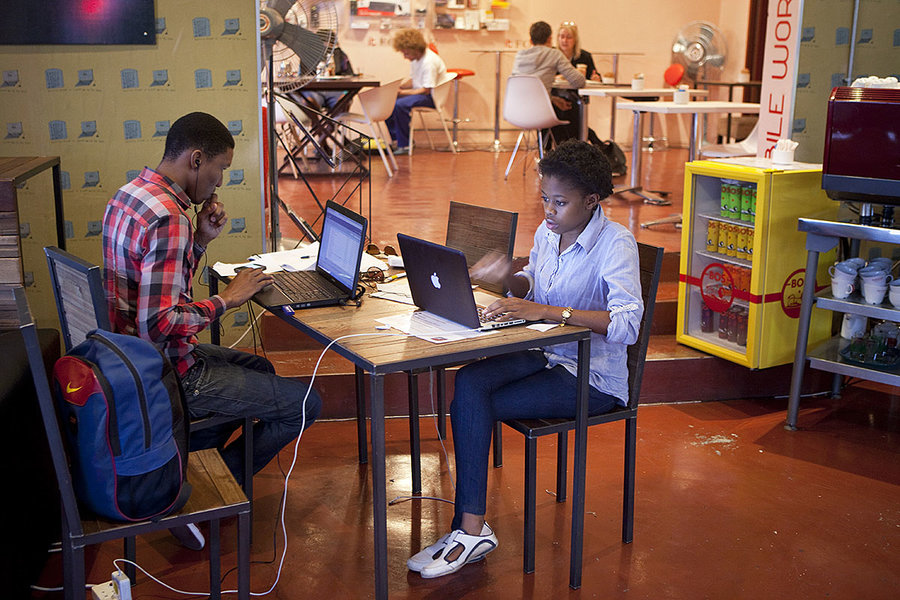
Roughly half the planet is on-line. That share displays the inhabitants of South Africa, the place the divide between customers and nonusers mirrors the divides in wealth and alternative within the nation extra usually.
More and more, activists are discovering success in flattening obstacles to web entry by framing their campaigns as a matter of human rights. In South Africa, a enterprise tribunal discovered earlier this month that two important suppliers’ excessive prices for cell information have been “anti-poor,” and should slash their costs to spice up “better financial and social inclusion.”
“In one other period, we determined that schooling was a proper, and that it needed to be ensured even if you happen to couldn’t pay. That’s the purpose we’re coming to with the web now,” says activist Onica Makwakwa.
However placing the web within the class of human rights, some have argued, locations an unfair burden on states to pay for his or her residents to have internet entry.
But many governments limit the web as a software to suppress dissent. In 2018, not less than 21 African nations skilled a full or partial shutdown of the web. Sarcastically, these shutdowns showcase the web’s rising significance as a software without cost speech on the continent.
Johannesburg
Ought to web entry be seen as a human proper?
To reply that query, activist Onica Makwakwa likes to start with a narrative.
In 2015, South Africa’s capital Pretoria started organising free Wi-Fi hotspots throughout the town. Native media interviewed a teenage boy from Atteridgeville, a poor black neighborhood on the town’s fringes, who frequently walked 4 miles roundtrip to make use of the closest hotspot.
Why is that this free Wi-Fi so necessary to you? they requested.
“I reside in a shack,” Ms. Makwakwa remembers him replying. “However once I’m on the web I’m now not a child dwelling in a shack.”
The web, in different phrases, opened the world to him. At this time, roughly half the planet’s inhabitants is on-line, and the hole between the huge universe they will entry there – from data to employment to digital cash – and the analog existence of the opposite half is opening wider yearly.
Activists like Ms. Makwakwa, Africa coordinator for the Alliance for Inexpensive Web, say that’s a disaster. With out web, most of the world’s poorest are being left behind within the international financial system. Those that are most oppressed are being denied information and methods to arrange.
However more and more, activists are discovering success in flattening obstacles to web entry by framing their campaigns as a matter of human rights. In South Africa, as an example, after years of strain by activists, a enterprise tribunal discovered earlier this month that two important suppliers’ excessive prices for cell information have been “anti-poor” and that they have to slash their costs to be able to create “better financial and social inclusion transferring ahead because the nation strikes into the digital age.”
“In one other period, we determined that schooling was a proper, and that it needed to be ensured even if you happen to couldn’t pay. That’s the purpose we’re coming to with the web now,” says Ms. Makwakwa. “We have to deal with it like a fundamental utility, a commodity like water or electrical energy that the poor deserve entry to to be able to reside a dignified life, even when they will’t pay.”

The South African case underscores that time. The Competitors Fee wrote in a report that the nation’s two largest mobile suppliers – MTN and Vodacom – had engaged in “exploitative worth discrimination.” The issue was each the excessive price of knowledge – round $10 for a gigabyte – and the upper prices of pay-as-you-go companies in contrast with contracts, which activists argued discriminated towards poor South Africans who may solely afford to buy airtime in small increments.
The fee agreed. It demanded that the businesses lower the value of knowledge inside two months, seemingly by 30% to 50%, and supply all pay as you go clients “a lifeline bundle of day by day free information to make sure all residents have information entry on a continuing foundation, no matter revenue ranges.”
The report nodded to the truth that the “proper to speak is a elementary proper,” says Lazola Kati, who organizes campaigns round communication rights for the South African nonprofit Right2Know, which advocated closely for the discount in information costs.
That view can also be backed by the United Nations, which has made rising web entry a part of its sustainable improvement objectives – indicators that should observe the standard of life in several nations.
Not everybody agrees with that evaluation, nonetheless.
“Expertise is an enabler of rights, not a proper itself,” wrote web pioneer Vint Cerf in 2012. A human proper “have to be among the many issues we as people want to be able to lead wholesome, significant lives, like freedom from torture or freedom of conscience.” By placing the web within the class of human rights, others have argued, it locations an unfair burden on states to pay for his or her residents to have internet entry, even after they can’t afford it.
However for a lot of governments, proscribing the web is just not about saving cash. It’s a software to suppress dissent.
In 2018, as an example, not less than 21 African nations skilled a full or partial shutdown of the web, largely in response to protests. In nations like Zimbabwe, the place greater than 95% of economic transactions occur through cell cash, these sorts of shutdowns have profound results on day by day life.
However these shutdowns, paradoxically, additionally showcase the web’s rising significance as a software without cost speech on the continent. In 2018, 1 / 4 of Africans have been on-line – nicely beneath the 51.four% worldwide, however a considerable improve from the four% of Africans utilizing the web a decade in the past.
“The rising variety of customers is posing an ever greater risk to governments,” Juliet Nanfuka, a researcher on the Collaboration on Worldwide ICT Coverage in East and Southern Africa, an web suppose tank and advocacy group based mostly in Kampala, Uganda, instructed the Monitor in January.
On the similar time, even in African nations the place authorities doesn’t intrude, the excessive costs of web entry additionally shut out many potential customers. Throughout the area, as an example, the typical price for a gig of knowledge is about eight% of the typical month-to-month wage. In Congo, Central African Republic, and Chad, the associated fee is greater than 20%. (For an American employee incomes $50,000 per yr, paying eight% per thirty days could be about $330.)
Roughly half of South Africans are on-line, however the divide between customers and nonusers mirrors the divides in wealth and alternative within the nation extra usually. Wealthy South Africans are much more seemingly to make use of the web than poor South Africans. Individuals in city areas use it greater than those that reside someplace rural. White folks have higher entry than folks of shade; males higher entry than ladies.
These gaps can by no means be crammed by the market, says Ms. Makwakwa, particularly in a spot like South Africa, the place assets of all types have been till just lately divvied up based on race.
“These sorts of inequalities didn’t create themselves,” she says. “And so our governments need to act deliberately to shut the hole as nicely.”
[ad_2]
Source link