[ad_1]
Historically, with a view to preserve shoppers on the fringe of community easy and simple to handle, all computational sources have been normally allotted to a central laptop. Large servers and infrastructure within the information middle have been the norm. However now the business is shifting from centralized to decentralized techniques. All the ability of the outdated core community is being disintegrated into smaller mini information facilities, all scattered round.
Now, we even have clever units that match within the palms of our palms which might be most likely 10x extra highly effective than a complete information middle 20 years in the past. In at present’s model of the consumer/server mannequin, the server doesn’t essentially maintain the ability; as a substitute, shared sources between web of issues or edge units make up a globally distributed edge computing.
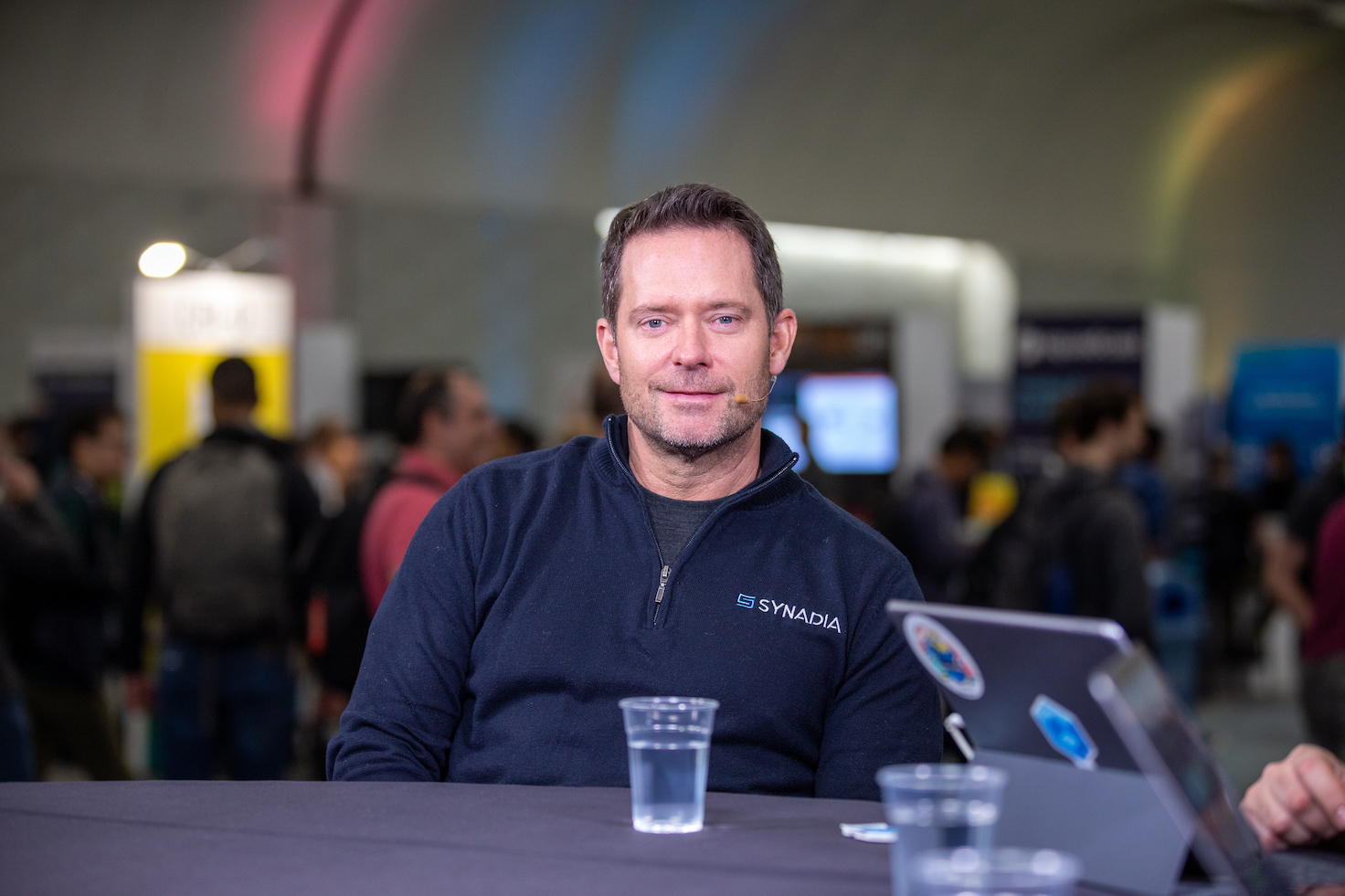
These distributed techniques are forming a connective economic system. Take the instance of the content material supply networks, that are bringing the online nearer to end-users. However lighting up this edge computing discipline just isn’t precisely about constructing smarter and lighter mini computer systems — it’s about pushing information and computing energy to the sting in a secured trend, in accordance with Derek Collison (pictured), founder and chief govt officer of Synadia Communications Inc.
“For a very long time, we have been swept up within the ‘cloud economic system,’ which was how you progress from CapEx into OpEx … after which, after all, it was all in regards to the information,” in accordance with Derek Collison (pictured), founder and chief govt officer of Synadia Communications Inc. “And it nonetheless is about information, however should you discover, it’s not the information transferring to the place you’re attempting to course of issues — now it’s abruptly being distributed. I see the worth driving out of those techniques now, as in how are they linked; how are you observing them; how are you securing them and trusting them?”
Collison spoke with Stu Miniman (@stu), host of theCUBE, SiliconANGLE Media’s cell livestreaming studio, and visitor host John Troyer (@jtroyer), chief reckoner at TechReckoning, through the KubeCon + CloudNativeCon occasion in San Diego, California. They mentioned the connective economic system, the NATS open-source messaging system, the Synadia enterprise mannequin, multicloud, and edge computing. (* Disclosure beneath.)
[Editor’s note: The following has been condensed for clarity.]
Miniman: How does NATS and messaging play into serving to clear up the communication subject?
Collison: NATS was constructed to energy Cloud Foundry … and NATS, identical to a whole lot of the opposite applied sciences, was constructed for an itch that wanted to scratch. So about two years in the past, we had the chance to truly take into consideration if we wished to make a enterprise out of NATS. The reply we got here up with internally as a group was [that] we would have liked to construct one thing that its worth was better than the sum of its components. So we took NATS, which was a really mature know-how, made it multi-tinted, made very forward-looking, safe, and made it run in any cloud, edge, IoT, with the hope that we might encourage folks to attach every part.
Miniman: Clarify [your] enterprise mannequin, what you’re doing, and the way that truly goes collectively?
Collison: So, once we began out, what we didn’t need to do is ignore the outdated fashions. I don’t assume a long-term enterprise mannequin is the outdated fashions, that means recurring assist, consulting, NRE work kind of stuff. And we [also] believed that the SaaS mannequin, that utility mannequin the place, once more, its worth is bigger than the sum of its components permits us to maintain every part open supply. However there’s a worth in being linked to this community — multicloud, cloud to edge, all that form of stuff. And what we would like is prospects to slowly transition to that.
After which the final piece of that pie is, there could also be people who find themselves working towards the worldwide utility, working their very own servers, they usually go, “That service proper there within that system, we adore it. We wish it on-premise. Can we truly license it from you?” So it’s a mix of software program and repair, license income, and recurring assist.
Miniman: So, are you enabling companions to ship these providers, or is that Synadia does that themselves? The place do these premium providers come from?
Collison: So, we’re going to seed the market. However we would like it to be an open market, and what we are going to present is issues like billing and issues like that. So we’ve designed it such that we don’t need to be the one operators. Matter of reality, if we’re profitable, we’re the smallest operator going ahead. However, the system is at all times interconnected, proper?
Miniman: There’s all this hype round multicloud, however there’s a whole lot of challenges. My definition that I’ve been saying for some time is for multiCloud to be actual, the worth that I get out of it needs to be better than the sum of its components. The place do we have to go as an business, as a complete, to succeed in that worth assertion that we speak about?
Collison: The place a corporation has a legit use [of a cloud] is to say, “We actually want better of breed in AI” or “better of breed in large information,” they usually need to run an app in Azure and an app in Google, and that’s form of probably the most practical scenario I’ve seen. So I nonetheless see a whole lot of pricing strain, posturing round multicloud, simply as a negotiation tactic. The place I see it being actual is, this class of apps, we need to run it on this cloud supplier to entry these providers which might be differentiating.
Troyer: Any recommendation to utility architects and technologists who’re selecting applied sciences right here? I imply, right here at this convention, Kubernetes is form of a typical assumption for lots of what individuals are doing. However there’s a whole lot of different components that plug into it … every part from messaging, to safety, to networking, to storage. What are your ideas on what are the best methods to do that so that you truly succeed?
Collison: It goes between selection and ease. So should you look in even the PaaS wars versus IaaS versus all that stuff, PaaS was a swing in direction of simplicity: “Get stuff accomplished.” After which there was, “Oh, I can get stuff accomplished, however I don’t have sufficient selection.” So we noticed this swing again. And I believe Kubernetes hit on the absolute good time to reap the benefits of, “Hey, we want selection at these base layers, proper?” And the best way Kubernetes was architected was to offer you that full selection. So if a startup’s coming alongside and saying, “OK, given the truth that the pendulum’s over right here,” realizing it’s going to be swinging again — and no less than for my part, we’re swinging again for simplicity — focus on how do you simplify what individuals are battling at present.
Miniman: An space that you just’re spending a while speaking about on the keynote was edge computing. And, completely, we want simplicity for that to have the ability to come there. What are you seeing within the edge area?
Collison: I see lots of people wanting to pull what they assume works in cloud out to the sting. Kubernetes works right here; we’re going to pull it out right here. We’re simply going to slim it up somewhat bit and bundle it. I don’t know if that’s the best reply. What I believe we want to consider is how can we get information and compute … securely in a trusted trend out to the sting, nonetheless that works.
Within the keynote, I talked somewhat bit about our pleasure round WebAssembly. However the place we get enthusiastic about it’s, we provide you with a drop-dead straightforward system and say, “I need to digitally signal that Net Meeting to be used on this sure scenario on the edge.”
I believe you’re going to see extra frequent denominators round WebAssembly, safe and signed net assemblies, than on how we truly deploy them. So that you’re going to see lighter weight issues — to not say that Kubernetes may not have relevance on the market, however I don’t assume it’s wanted to get to the place we would like. We’d like that belief issue, ubiquitous communications to essentially form of gentle that discipline up.
Watch the whole video interview beneath, and you’ll want to take a look at extra of SiliconANGLE’s and theCUBE’s protection of the KubeCon + CloudNativeCon occasion. (* Disclosure: Cloud Native Computing Basis sponsored this section of theCUBE. Neither CNCF nor different sponsors have editorial management over content material on theCUBE or SiliconANGLE.)
https://www.youtube.com/watch?v=Qms7bpEvSSs?function=oembed
Picture: SiliconANGLE
Because you’re right here …
Present your assist for our mission by our 1-click subscribe to our YouTube Channel (beneath) — The extra subscribers we’ve the extra then YouTube’s algorithm promotes our content material to customers fascinated with #EnterpriseTech. Thanks.
Help Our Mission: >>>>>> SUBSCRIBE NOW >>>>>> to our Youtube Channel
… We’d prefer to inform you about our mission and how one can assist us fulfill it. SiliconANGLE Media Inc.’s enterprise mannequin relies on the intrinsic worth of the content material, not promoting. In contrast to many on-line publications, we don’t have a paywall or run banner promoting, as a result of we need to preserve our journalism open, with out affect or the necessity to chase site visitors.The journalism, reporting and commentary on SiliconANGLE — together with reside, unscripted video from our Silicon Valley studio and globe-trotting video groups at theCUBE — take a whole lot of onerous work, money and time. Conserving the standard excessive requires the assist of sponsors who’re aligned with our imaginative and prescient of ad-free journalism content material.
In case you just like the reporting, video interviews and different ad-free content material right here, please take a second to take a look at a pattern of the video content material supported by our sponsors, tweet your support, and preserve coming again to SiliconANGLE.
[ad_2]
Source link