[ad_1]
“I feel it is a fable to consider that prospects are model agnostic,” mentioned Piyush Pandey, govt chairman of Ogilvy. “If that was so, day by day you’d be altering your cleaning soap. If that was so, you wouldn’t be utilizing a number of issues that you’ve got used endlessly.”
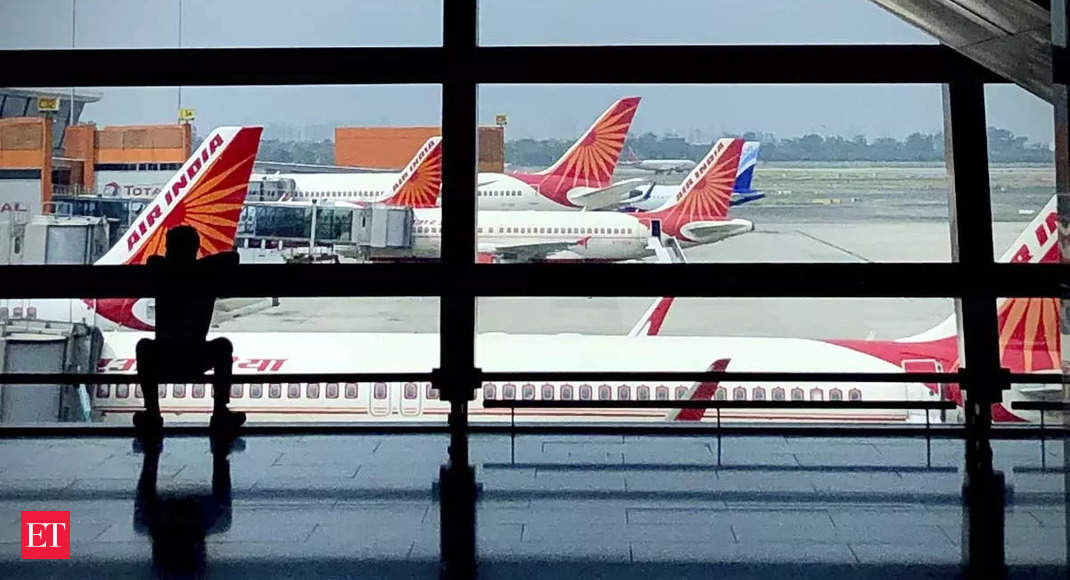
Tata will attempt to convey again the Air India of its glory years, when it had memorable service that was accompanied by good, generally irreverent promoting.
“The emotional bond with Air India of individuals like me, and lots of like me, is large. Let’s not predict this earlier than they unfold their playing cards. If the Tatas can create a Titan they’ll do that too,” Pandey mentioned.

The Air India Maharaja “stands for India. For any model, any mascot, any emblem, any id is as significant as what they do with it.”
Begun as Tata Airways by JRD Tata in 1932, it was renamed Air-India Worldwide when it started abroad providers in 1948. After nationalisation in 1953, two carriers have been arrange — Indian Airways for home providers and Air-India for abroad. JRD, nevertheless, would keep on as chairman till 1978. The hyphen was eliminated in 2005.
However earlier than that, in 1938, Bobby Kooka joined Air India. He and artwork director Jal Cawasji got here up with the Maharaja, the Air India mascot. They’d form the provider’s picture for many years to return, together with conceptualising the Maharaja.
Michael Mascarenhas, the airline’s advertising and marketing frontman for 3 many years and its managing director in 2001, mentioned “no different airline has ever had a mascot a like this.” The Maharaja was an impressed alternative, he mentioned.
“It got here by sheer probability and it was tailored brilliantly. If you needed to advertise snowboarding by selling Switzerland as a vacation spot, you confirmed the Maharaja snowboarding. If you needed to advertise Rome, you confirmed him with a priest, having a loaf of bread in his hand on a Lambretta,” he mentioned.
Uttara Parikh, an integral a part of Air India’s manufacturers group for many years, remembers her time working with Kooka and developing with concepts for hoardings outdoors the headquarters constructing at Nariman Level in Mumbai.
The Air India workplace would begin performing at 9:15 morning. A minute later, Kooka would name Parikh with a contemporary thought for a hoarding. Bahadur — she recollects simply the one title — could be known as from promoting company JWT. As soon as the thought was authorized, a painter known as Creado was summoned all the best way from Juhu. He would hand-paint the hoarding in a couple of hours and it might be prepared by night. In a while, prime fashions and stars equivalent to Zeenat Aman would function in Air India posters.
The sharp wit that knowledgeable Air India’s commercials usually bought the group into hassle.
One in all them was simply earlier than the supply of the Boeing 707.
“The Maharaja was proven seated on a rocking chair in feminine garb as if he was anticipating a baby and knitting as a pregnant girl could be knitting. And it mentioned, Can you retain a secret?” Parikh mentioned. “However the British deputy excessive commissioner took nice offence to this. And he phoned the pinnacle of our promoting company, who additionally occurred to be British, to say how are you going to make such a joke?”
This was as a result of it simply so occurred that the queen of England Elizabeth II was additionally anticipating on the time, pregnant with Prince Andrew.
Nargis Wadia was one of many first graphic designers at Air India, becoming a member of the airline within the 1950s and dealing intently with Kooka and Cawasji to design, amongst different issues, cheeky posters promoting worldwide flights.
Wadia known as them “uninhibited in color and depiction.” For a poster saying flights to Paris, she took inspiration from the can-can dancers of the French cabaret. Their leotard-clad legs spelled out the vacation spot and the ‘i’ in Paris was dotted with the pinnacle of the Maharaja.
“There have been some old school parliamentarians who took umbrage at that. How will you have the pinnacle of the Maharaja ogling at these girls in leotards? It was very foolish,” mentioned Wadia.
Once they needed to promote slumberettes in new planes going to London, the poster confirmed a cabin attendant cradling the maharaja in a reclined seat.
These recollections are what the brand new administration ought to play up.
“Generally, service manufacturers can experience on an essence of excellent old school, nostalgic values. In current instances, with a lot turmoil, the consolation attraction of manufacturers that belonged to a bygone rose-tinted age may work,” mentioned Agnello Dias, cofounder of Taproot Dentsu.
“Maybe one a part of shoppers’ minds subconsciously miss the relative stability and calming affect of an period when emotional influences have been much more earnest, honest and harmless. Within the case of the Maharaja, the Tatas may construct upon that model essence via a recent filter.”
Dias cites the pattern of RD Burman’s composition Dum Maaro Dum being featured within the music accompanying the launch of Apple’s iPhone13 not too long ago.
“It should not be that in your face — the secret is to place out refined cues harking back to earlier, higher instances,” he mentioned. “The Maharaja is extra related than ever, particularly as a result of on this utilitarian atmosphere, folks crave nostalgia. I hope the Tatas can revive it, similar to they need to Air India.”
[ad_2]
Source link